
What Accountin does
The work of a small practice, from the first bank transaction to the filed accounts, for every client you have.
Books
Each client has its own set of books with a standard chart of accounts you can change.
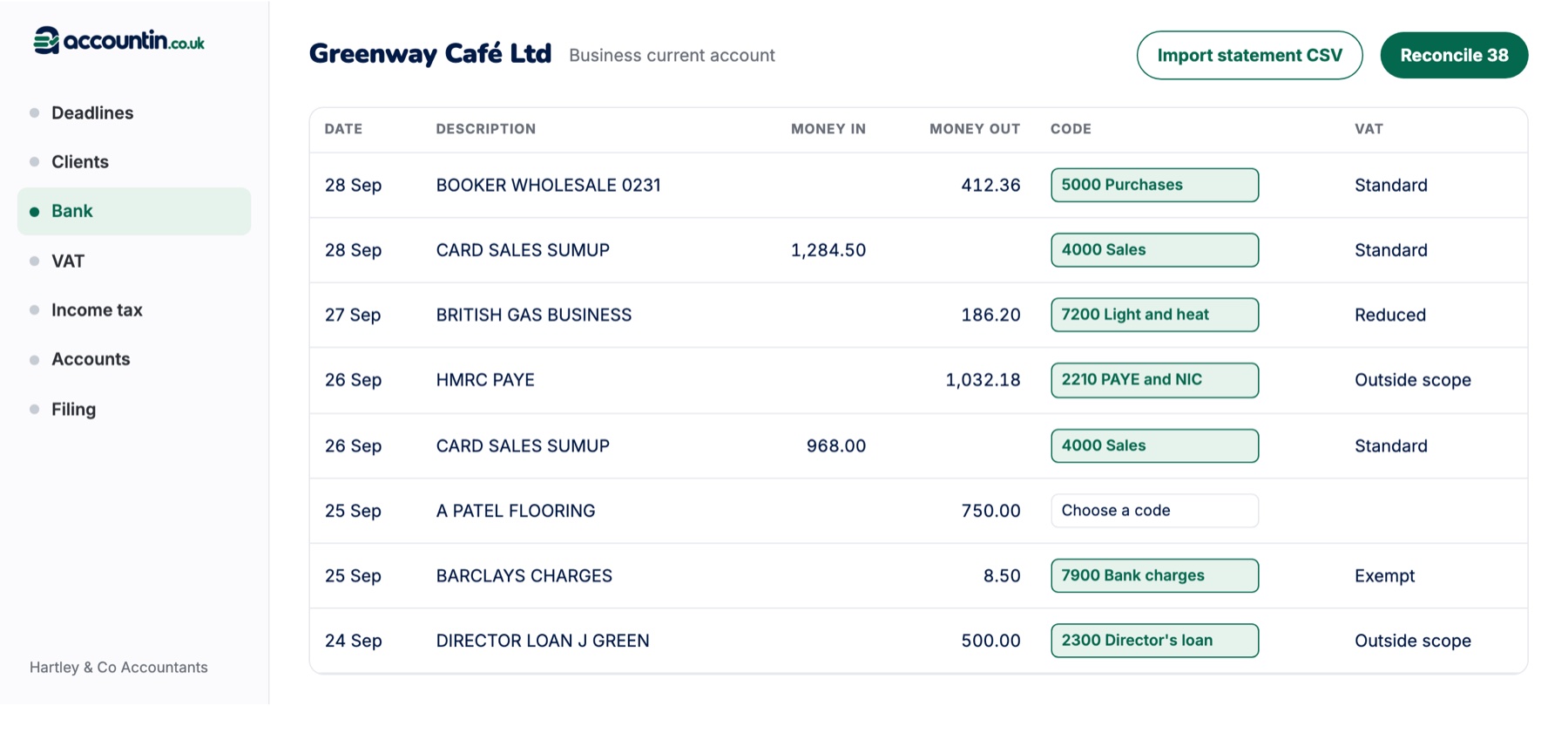
- Bank feeds, or import a bank statement CSV
- Bank reconciliation
- Sales and purchase invoices, entered one by one or in a batch
- Customer and supplier ledgers with aged balances
- Journals for wages, depreciation, accruals, prepayments, stock and dividends
- Fixed asset register with depreciation
- Trial balance, profit and loss account and balance sheet at any date
- Several people can work on the same client at the same time
VAT
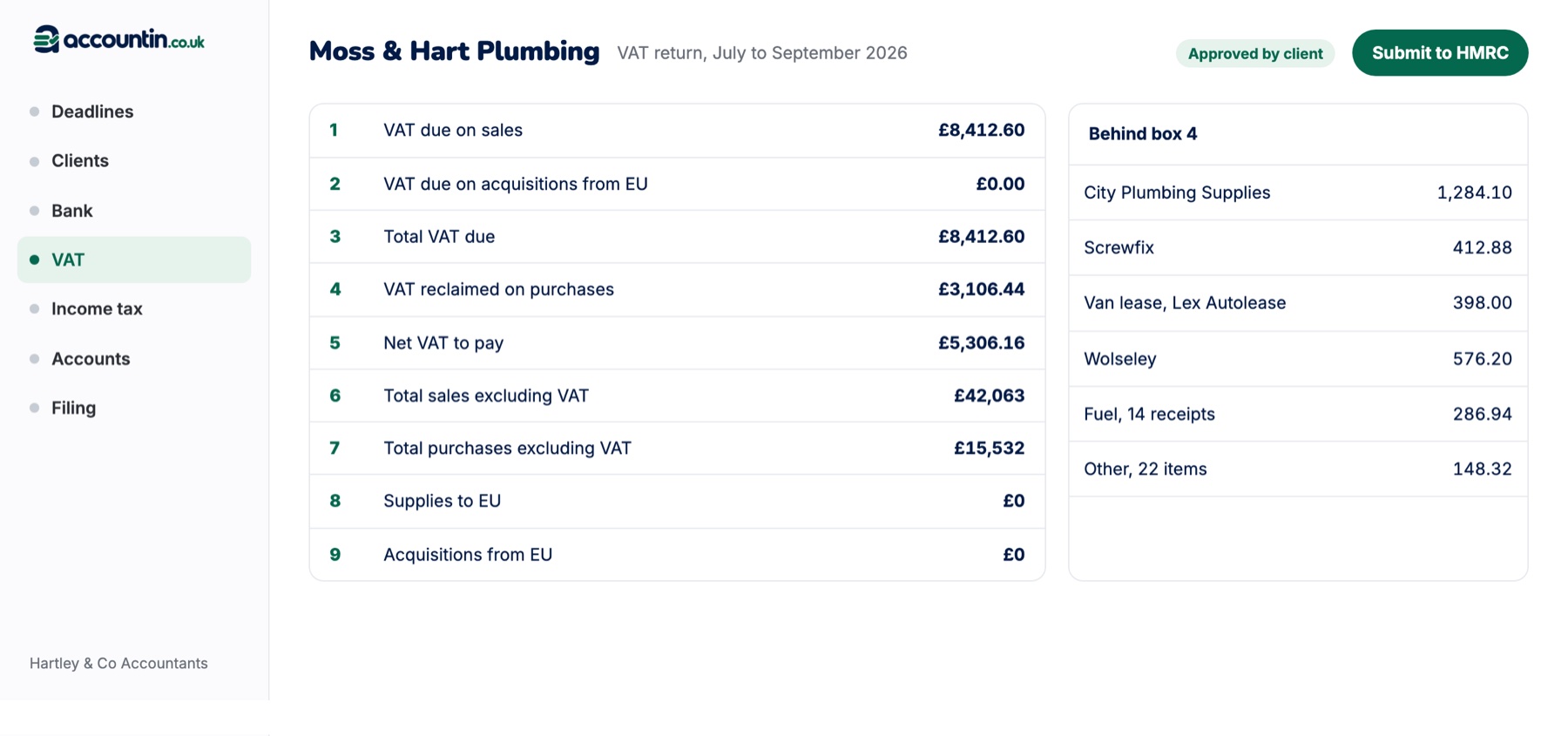
VAT returns are worked out from the books and submitted to HMRC under Making Tax Digital. Each return keeps the transactions behind every box, so you can answer a client's question about a figure months later. A client can approve a return before it is submitted.
- Schemes
- Standard, cash accounting, flat rate
- Submission
- Making Tax Digital, direct to HMRC
- Approval
- By the client, before submission
Income tax quarterly updates
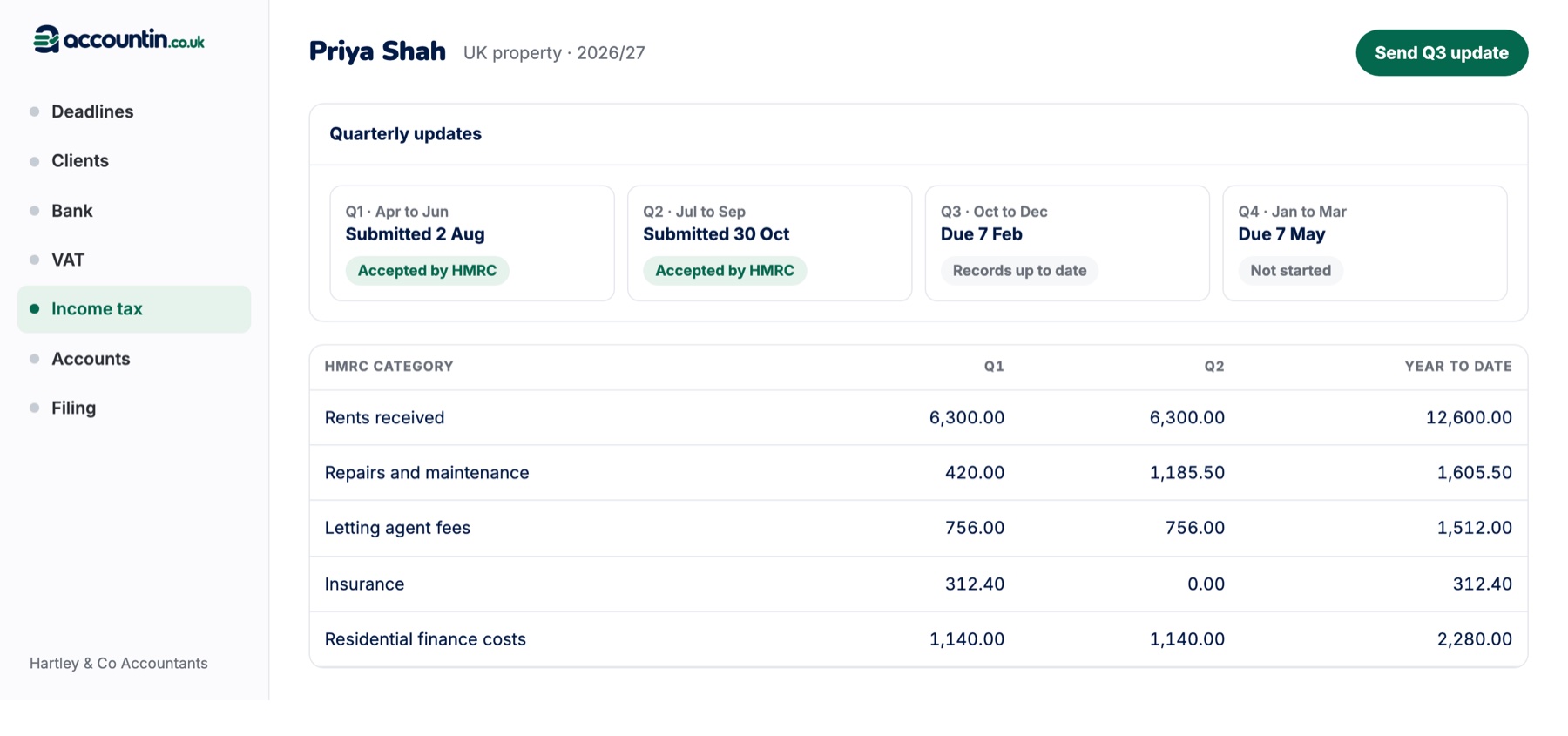
Sole traders and landlords within Making Tax Digital for Income Tax send HMRC a quarterly update of income and expenses, then a final declaration after the year end. Accountin builds each update from the client's records, maps them to HMRC's categories, and keeps a record of every submission and HMRC's reply.
Self-employment and UK property income are covered, on either standard or calendar quarters. The guide to Making Tax Digital for Income Tax sets out the rules and deadlines.
Year-end accounts
Accountin produces two kinds of accounts from the trial balance:
- Micro-entity accounts under FRS 105. The balance sheet and statements Companies House needs.
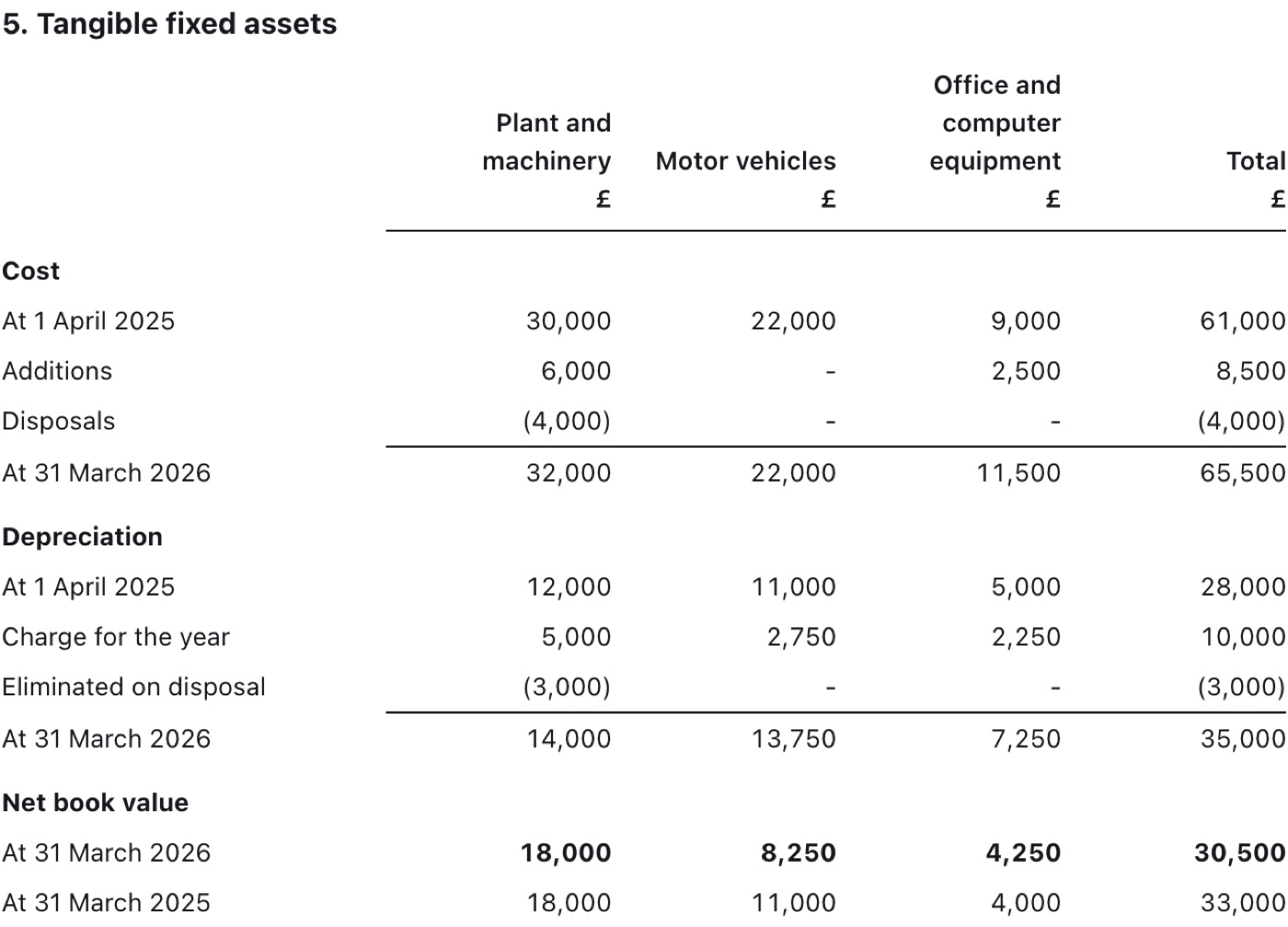
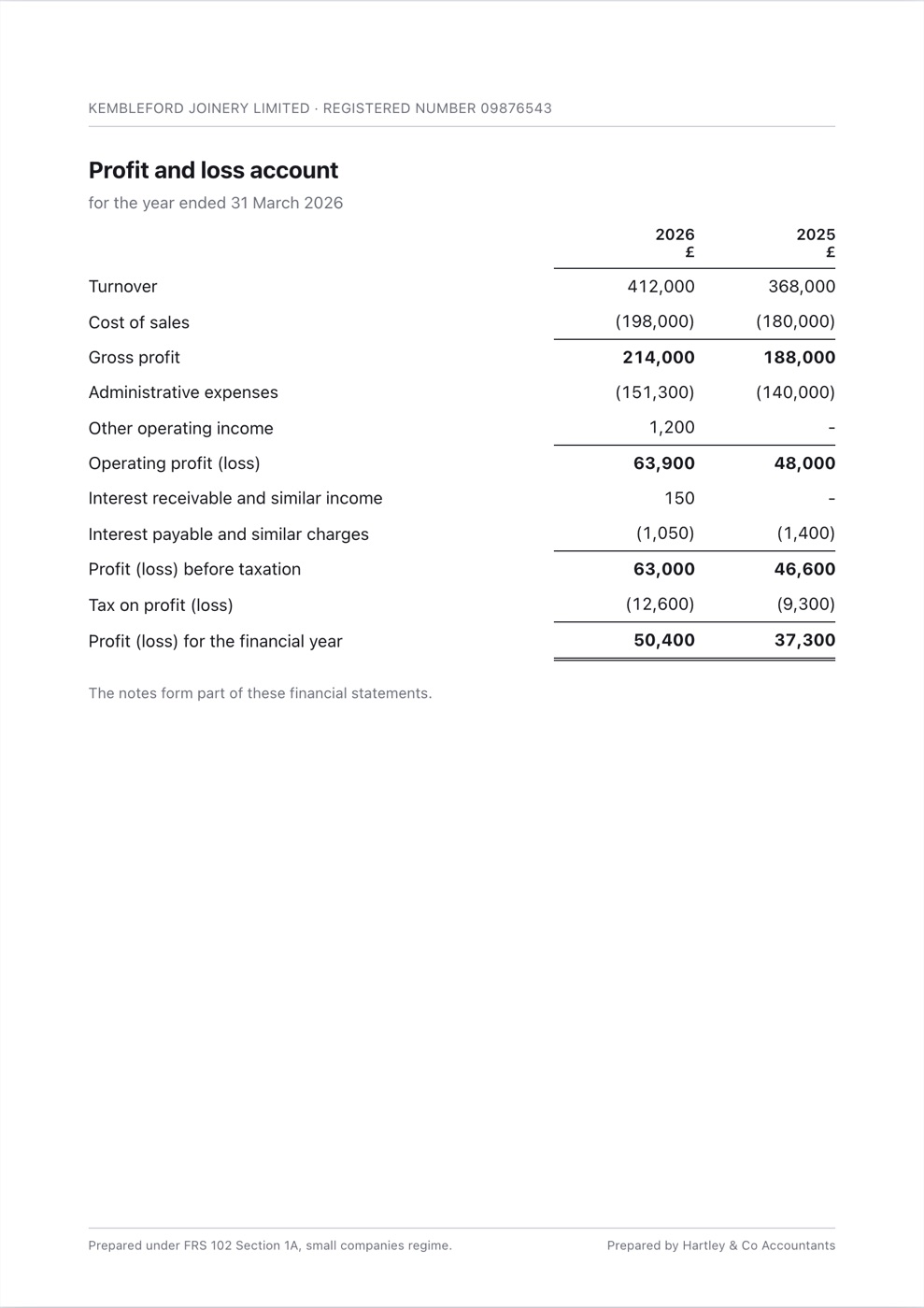
- Small company accounts under FRS 102 Section 1A. Profit and loss account, balance sheet, directors' report, accounting policies and notes: staff numbers, fixed asset movements by class, debtors, creditors, secured debts, directors' advances and related parties.
You get a full copy for the shareholders and a filing copy for Companies House. The filing copy can leave out the profit and loss account and directors' report, as the small companies regime allows, or include them.
Checked before it is filed
A set of accounts is refused if the balance sheet does not balance, if the fixed asset notes disagree with either balance sheet, or if the profit and loss reserve does not carry from last year to this year. Every problem is listed at once, in plain words, with the figures.
Each figure is rounded to whole pounds before the totals are worked out, so every column adds up on the page.
Filing
Accounts are filed with Companies House in inline XBRL, the tagged format Companies House and HMRC read. The corporation tax return goes to HMRC with the accounts and the tax computation attached. Each filing shows its reference and its status once Companies House or HMRC reply.
Working with clients
Give a client their own login to send you bank statements and receipts, see their figures and approve a return. A client who keeps their own books can do it in Accountin, and you see the same records.
Accountin is opening to its first practices
Register your practice and we will contact you to set up your account.
Register your practice